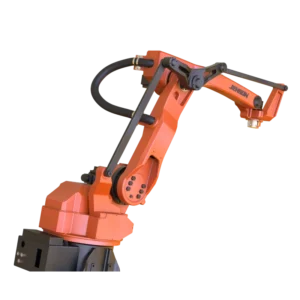
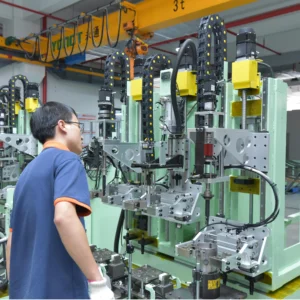
In today’s fast-paced industrial landscape, flexibility and precision are no longer optional—they’re essential. As manufacturers grapple with rising demand for high-mix, low-volume production and the need to minimize downtime, Robot End-of-Arm Tooling (EOAT) has emerged as a game-changing solution.
What Is an End Effector (EOAT)?
An End Effector (EOAT) is the critical component at the terminus of a robotic arm, designed to interact directly with workpieces, tools, or environments. Acting as the robot’s “hand,” EOATs enable tasks ranging from precision welding to delicate material handling. Unlike rigid robotic arms, EOATs are modular and customizable, allowing manufacturers to tailor solutions for specific applications.
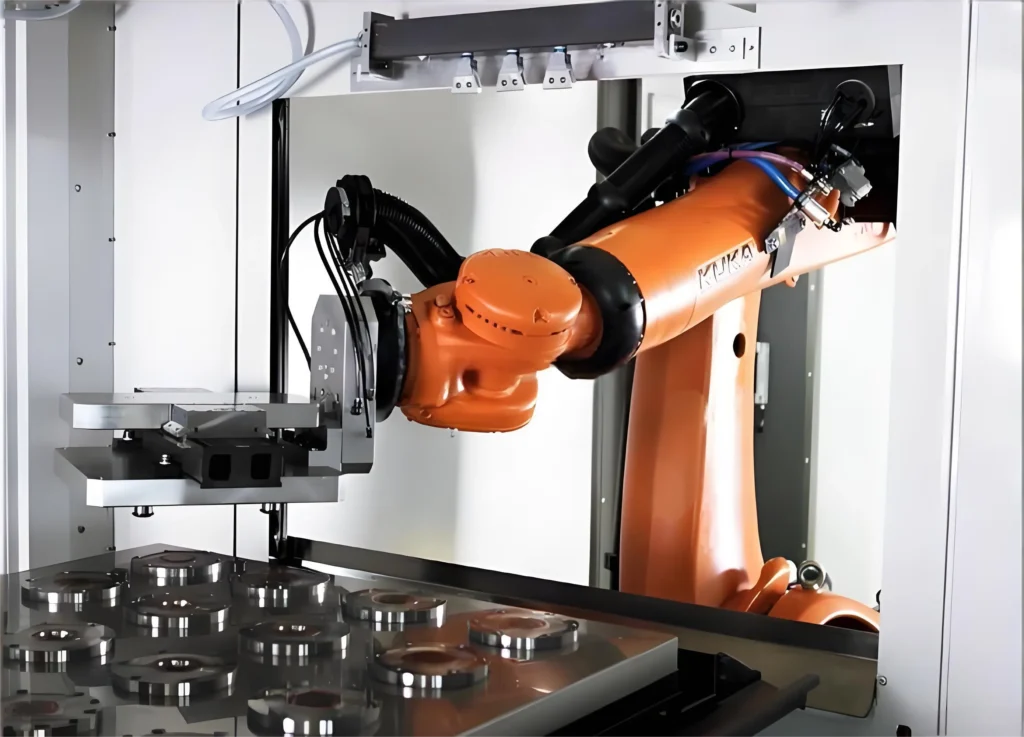
Different Types of End Effectors (EOAT)
EOATs vary widely based on functionality, industry requirements, and operational demands. Below are the most common categories:
1. Grippers
Grippers are the most ubiquitous EOATs, designed to grasp and hold objects. They include:
Mechanical Grippers: Use jaws or fingers to clamp parts. Ideal for rigid components like metal sheets or automotive parts. Subtypes include parallel, angular, and three-finger grippers.
Vacuum Grippers: Suction cups create a vacuum to lift flat or smooth surfaces. Lightweight and fast, but unsuitable for porous or irregular shapes. In scenarios with high requirements for sheet metal parts, vacuum suction cups minimize the risk of scratching the metal. For example, they can be integrated with Jehson’s single-machine multi-process robots for automated production lines.
Magnetic Grippers: Electromagnets or permanent magnets secure ferrous materials. Perfect for heavy steel plates or home appliance stamping, such as the left side panel and motor bracket of air conditioner outdoor units. For example, they can be integrated with independent stamping robots to create automated production lines for air conditioner outdoor unit casings.
Servo Grippers: Motorized jaws adjust grip force for delicate tasks (e.g., electronics). Provide ±0.1mm precision and compatibility with IoT systems.
2. Welding and Cutting Tools
Spot Welders: Join metal parts using controlled electrical arcs. Widely used in automotive body assembly.
Laser Cutters: High-precision tools for intricate cuts on metals, ceramics, or composites.
Adhesive Dispensers: Apply glue or sealants with micron-level accuracy for electronics or packaging.
3. Specialized Tooling
Screwdrivers/Nut Runners: Automate assembly tasks with torque control. Critical for electronics and machinery.
Paint Sprayers: Ensure uniform coating thickness for automotive or aerospace finishes.
Material Removal Tools: Deburring, grinding, or polishing tools for post-processing.
How to Choose the Right EOAT?
Selecting the optimal EOAT hinges on five factors:
1. Payload and Force Requirements
Calculate the weight and stress on the EOAT. For heavy automotive parts, hydraulic grippers (500–1000N) are ideal. For lightweight electronics, servo grippers (10–50N) suffice.
2. Compatibility with Workpiece Geometry
Irregular shapes demand adaptive EOATs. Magnetic grippers with customizable poles or vacuum systems with multi-zone suction excel here.
3. Environmental Conditions
Corrosive environments require stainless steel or coated components. Cleanrooms need non-contaminating materials like PEEK or Delrin.
4. Speed and Precision Needs
High-speed packaging lines benefit from pneumatic grippers (0.5s cycle time), while medical devices demand servo-driven systems (±0.02mm repeatability).
5. Integration with Automation Systems
Ensure EOATs connect seamlessly with PLCs, vision systems, and IoT platforms. Modular designs allow quick swaps between tasks (e.g., welding to painting).
Why EOAT Matters?
Adaptability: Switch between tasks in minutes (e.g., from picking car parts to applying adhesive seals).
Efficiency: Reduce cycle times by 30–50% compared to manual operations.
Scalability: Ideal for industries like automotive, electronics, and food packaging, where product variations are common.
For example, a magnetic EOAT can securely grip ferrous materials on a production line, while a vacuum-based system handles fragile glass panels without leaving residue. Integrating sensors and IoT capabilities further enhances their intelligence, enabling real-time adjustments and predictive maintenance.
The Key Takeaway
Robot EOATs are the linchpin of modern industrial automation, offering unmatched flexibility and precision. By understanding their types, applications, and future trends, manufacturers can unlock efficiency gains and stay ahead in competitive markets.
Ready to elevate your automation strategy? Explore Jehson’s custom automatic stamping line solutions—engineered for precision, durability, and scalability.