In the ever-evolving landscape of modern manufacturing, automation stands as a cornerstone of innovation, efficiency, and competitiveness. From automotive assembly lines to pharmaceutical production, automated machinery has transformed how goods are designed, fabricated, and delivered. But what exactly is automation in manufacturing, and how does it redefine industrial processes? This article delves into the fundamentals, technologies, benefits, and future trends of automated machinery, illustrated through real-world applications and technical insights.
What Is Automation in Manufacturing?
Automation in manufacturing refers to the use of control systems, robotics, and information technology to execute tasks with minimal human intervention. It encompasses a spectrum of technologies—from programmable logic controllers (PLCs) and sensors to advanced robotics and artificial intelligence (AI)—designed to streamline production, enhance precision, and reduce operational costs. Unlike manual processes, automated systems operate with speed, consistency, and reliability, making them indispensable in high-volume, precision-critical industries.
The roots of industrial automation trace back to the early 20th century with mechanical systems like conveyor belts. However, the digital revolution catalyzed a paradigm shift. Today’s automated machinery integrates software, hardware, and connectivity (e.g., IoT) to create “smart factories”—fully integrated facilities where machines communicate, adapt, and optimize operations in real time.
Core Components of Automated Machinery Systems
Modern automated machinery relies on interconnected subsystems working harmoniously. Here’s a breakdown of key components:
1. Power Distribution
Ensures reliable energy flow to motors, drives, and controllers. Industrial standards, such as NFPA 79, dictate safety protocols for electrical distribution, including circuit breakers, grounding, and overload protection. For example, a CNC machine’s power system must handle high-voltage demands while safeguarding against short circuits.
2. Motor Control and Drives
Motors are the muscles of automation. Controllers like variable frequency drives (VFDs) regulate speed and torque, optimizing energy efficiency. Safety features such as emergency stops and thermal overload relays prevent damage during malfunctions. For instance, Capmatic’s Bambino system uses servo-driven actuators to achieve precise filling and capping motions.
3. Safety Systems
Mandatory safeguards protect workers and equipment. Safety-rated PLCs, light curtains, and interlocked guards immediately halt operations upon detecting hazards.
4. Programmable Logic Controllers (PLCs)
The brain of automation, PLCs execute programmed commands to coordinate inputs (sensors) and outputs (actuators).
5. Human-Machine Interfaces (HMIs)
HMIs provide operators with real-time data visualization and control. Touchscreens and mobile apps enable adjustments without physical access to machinery.
6. Communication Networks
Ethernet/IP and PROFINET facilitate seamless data exchange between machines and enterprise systems. Cloud connectivity allows predictive maintenance via AI-driven analytics.
Types of Automation in Manufacturing
Automation strategies vary based on production goals:
- Fixed Automation (Hard Automation)
Suited for high-volume, repetitive tasks with minimal variation. Examples include automotive paint shops and beverage bottling lines, where consistent, high-speed output is prioritized over flexibility. - Programmable Automation
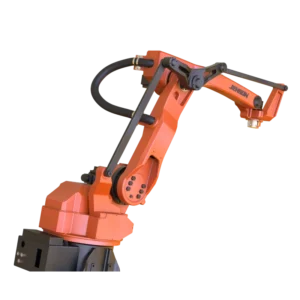
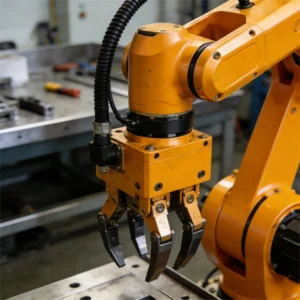
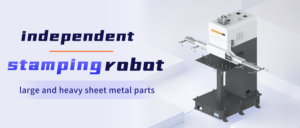
Enables flexibility for batch production through reprogrammable systems. Jehson Industrial Robotics exemplifies this category. Specializing in programmable automation, Jehson’s robotic solutions are deployed across diverse industries, including home appliances, automotive stamping hardware, home furnishing hardware, and new energy. Jehson’s modular automation platforms allow manufacturers to reprogram workflows in hours—a critical advantage in industries facing volatile demand. - Flexible Automation (Soft Automation)
Optimized for customization and rapid changeovers. These systems, often involving collaborative robots (cobots), adapt to diverse tasks in dynamic environments like warehouses and electronics assembly, enabling quick reconfiguration for varying product demands. By prioritizing adaptability over rigid repetition, flexible automation supports small-batch production and frequent design updates, making it ideal for markets with shifting consumer preferences.
Key Technologies Driving Automated Machinery
Innovations propelling the industry include:
Robotics and Machine Vision
- Advanced Vision Systems: robots inspect parts for micro-defects or guide assembly in low-light environments.
- 3D Spatial Awareness: Robotic systems handle complex tasks such as warehouse palletizing, reducing labor-intensive workflows.
Industrial IoT (IIoT)
- Predictive Maintenance: Real-time sensor data analysis reduces downtime by 20-30%.
- Edge Computing: Localized data processing enables faster decision-making in environments like oil refineries.
The Key Takeaway
Programmable automation, exemplified by Jehson Industrial Robotics, is a catalyst for industrial evolution. By blending flexibility, precision, and connectivity, manufacturers achieve unprecedented efficiency and innovation. Whether producing household appliances, automotive components, or custom furnishings, automated machinery empowers businesses to thrive in a competitive landscape. As technologies like IIoT and AI mature, tomorrow’s factories will be hyper-connected, self-optimizing ecosystems—ushering in an era of smart, sustainable production.