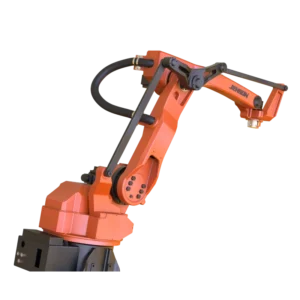
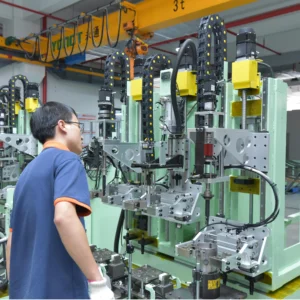
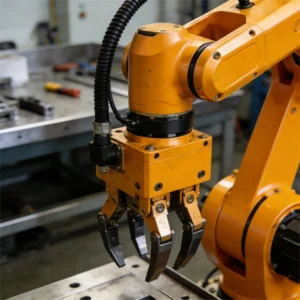
In the world of industrial robotics, the term “control system” is often thrown around—but what exactly does it mean? Simply put, a robot’s control system is its central nervous system, dictating how it moves, responds to commands, and interacts with its environment. From assembling car parts to packaging consumer goods, these systems are the unsung heroes enabling precision and efficiency on factory floors worldwide.
What Are Robot Control Systems?
At its core, a robot control system is a network of hardware and software that governs a robot’s actions. It interprets input commands, such as from a human operator or AI algorithm, and translates them into precise movements, adjustments, and reactions. Think of it as the bridge between a robot’s physical capabilities and its intended purpose.
Types of Robot Control Systems
There are three primary types of control systems:
Centralized Control Systems
How It Works: All decision-making occurs through a single, centralized computer or controller.
Pros: Simplicity and cost-effectiveness.
Cons: Limited scalability and slower response times for complex tasks.
Example: Older industrial robots utilized centralized systems for repetitive tasks such as welding or painting.
Master-Slave Control Systems
How It Works: A “master” controller (e.g., a human operator) sends commands to a “slave” processor, which executes movements in real time.
Pros: Exceptional precision for high-speed tasks (e.g., CNC machining).
Cons: Poor adaptability and challenging maintenance.
Example: Jehson Robot’s collaborative arms utilize hybrid master-slave systems to strike a balance between speed and safety during human-robot interactions.
Decentralized Control Systems
How It Works: Multiple controllers manage different subsystems (e.g., motion, sensors, safety) independently.
Pros: Real-time responsiveness, scalability, and fault tolerance.
Cons: Higher initial complexity.
Example: Modern autonomous mobile robots (AMRs) rely on decentralized systems to navigate dynamic warehouse environments.
Key Components of Robot Control Systems
Every control system, regardless of type, comprises several critical elements working in harmony:
Power Supply: Fuels actuators, sensors, and controllers. Options include electricity, hydraulics, or pneumatics.
Sensors: Provide real-time data on position, temperature, pressure, and proximity.
Controllers (Computers/Microprocessors): Analyze sensor data and execute pre-programmed instructions, adaptive learning.
Actuators: Convert electrical signals into physical motion (e.g., robotic arm joints).
User Interface: Allows operators to program, monitor, and adjust robot behavior.
Applications of Robotic Control Systems
Automotive Manufacturing: Jehson’s stamping robots manufacture metal parts of automotive vehicles with ±0.02 mm accuracy, outpacing human counterparts.
Electronics Assembly: Force-sensitive controls enable delicate soldering and component placement in cleanrooms.
Logistics: AMRs’ decentralized systems navigate warehouses at speeds up to 2 m/s while avoiding obstacles.
Future Trends in Robotic Control Systems
Emerging technologies like Edge AI empower robots to process data locally for instant decision-making in dynamic environments, such as warehouse navigation or assembly line adjustments. Digital twins enhance efficiency by simulating robotic operations in virtual environments, identifying flaws before physical deployment. Swarm robotics enables coordinated group behaviors, allowing fleets of robots to collaborate on large-scale tasks like disaster response or precision agriculture. These advancements collectively drive scalability, adaptability, and autonomy in modern automation.
The Key Takeaway
Robot control systems are the linchpin of modern automation, blending hardware, software, and intelligence to redefine what’s possible. With Jehson Robot, businesses gain a competitive edge through reliable, adaptable, and future-proof solutions. Whether you’re automating a factory floor or optimizing a supply chain, our control systems deliver precision, safety, and scalability.